
How to Analyze NBA Points Props Using Real Data
Betting on NBA points props looks simple on the surface. You check a player’s season average, compare it to the betting line, and make a decision.
In reality, this is exactly why most bettors lose.
Season averages hide context. Minutes change, matchups matter, and recent form is far more important than what a player did three months ago. If you want to improve your results, you need a data-driven approach focused on what is happening now, not on outdated averages.
In this guide, you’ll learn how to properly analyze NBA points props using real, actionable data.
Free access available.
Why Season Averages Don’t Work for Points Props
Season averages are misleading for several reasons:
- They include games with limited minutes (foul trouble, blowouts, injuries)
- They ignore recent changes in role and usage
- They don’t reflect matchup difficulty
- They don’t account for pace or defensive schemes
A player averaging 24 points per game might have scored:
- 18 points or less in 6 of his last 10 games
- or benefited from a few extreme performances that inflate the average
Relying only on this number leads to overconfidence and bad bets.
To analyze points props correctly, you need to focus on recent performance and context.
How to Analyze NBA Points Props Step by Step
Here’s a simple and effective framework you can use every day.
1. Focus on the Last 5–10 Games
Recent form matters more than season-long stats.
Ask:
- Is the player consistently scoring near or above the current line?
- Are there clear upward or downward trends?
A player averaging 22 points on the season but scoring 26+ in 7 of the last 10 games is in much better shape than the opposite scenario.
2. Check Minutes Played Consistency
Points follow minutes.
Look for:
- Stable playing time (no random drops)
- Role security (starter vs bench uncertainty)
If a player needs 36 minutes to hit his points line but has been playing only 30–32 lately, the prop becomes risky.
3. Analyze the Matchup
Not all defenses are equal.
Key questions:
- Does the opponent allow high scoring to this position?
- Is the pace of the game fast or slow?
- Is the game expected to stay close?
Fast-paced games with competitive spreads increase scoring opportunities.
4. Compare the Betting Line to Recent Reality
Instead of asking:
“Is this line lower than his average?”
Ask:
“Is this line aligned with his recent production and role?”
This small shift in thinking dramatically improves decision-making.
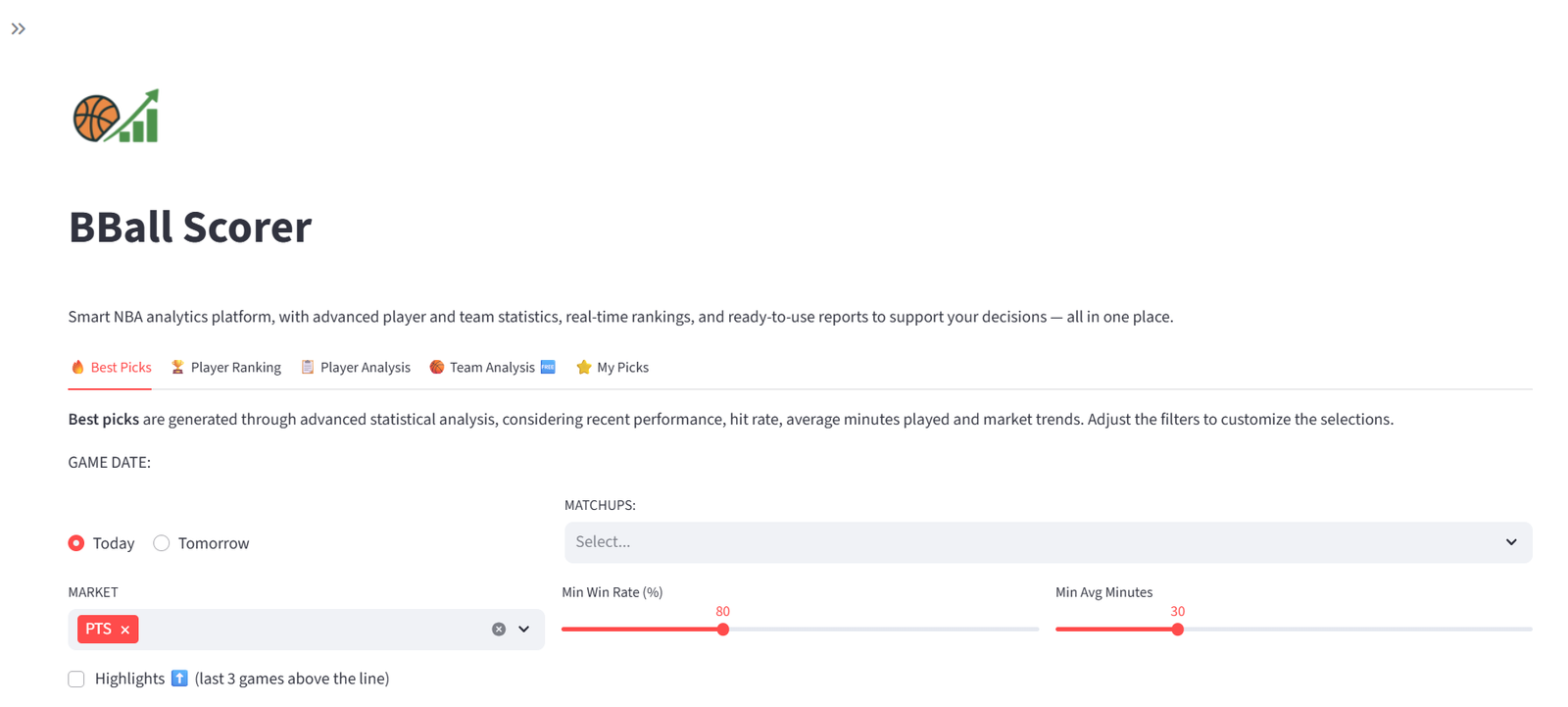
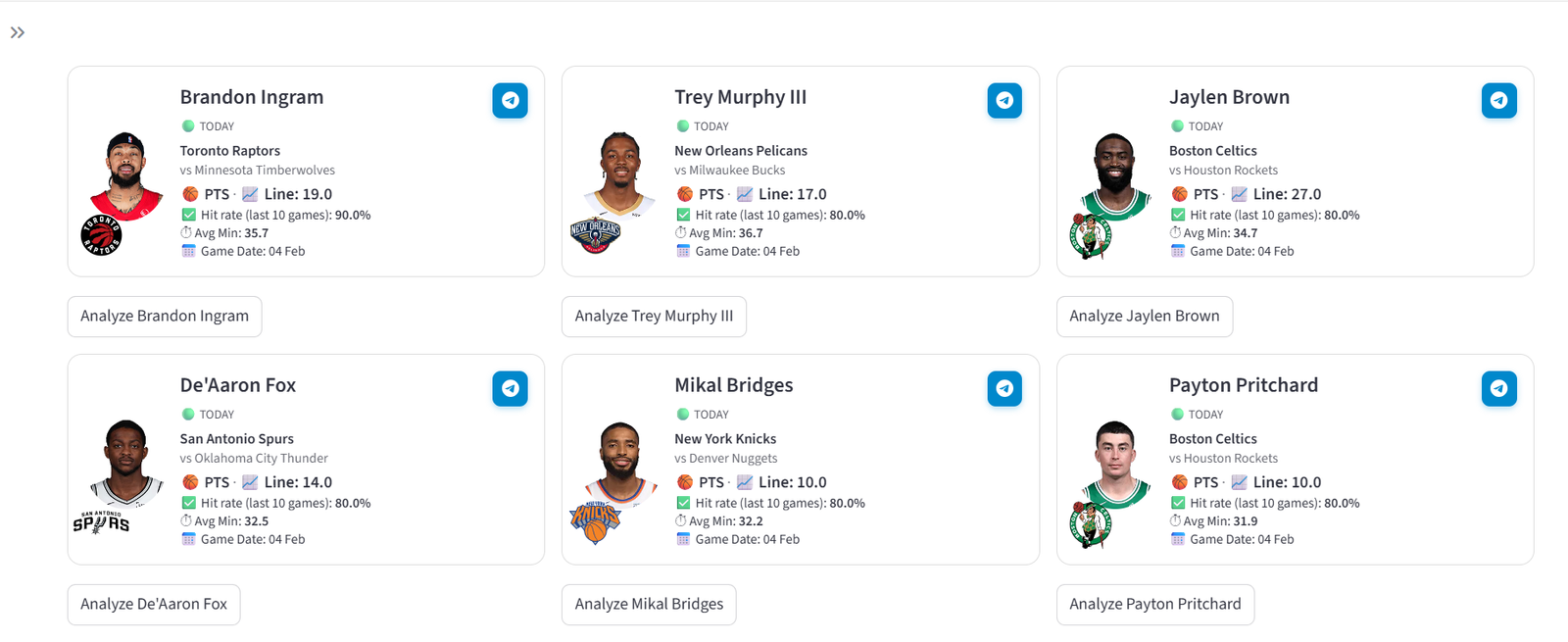
Using Real Data to Find Better Points Picks
Manually tracking all these factors is time-consuming.
That’s where data tools like bballscorer make the process faster and more reliable.
With real-time player data, you can:
- Quickly view recent scoring trends
- Compare last games vs betting lines
- Filter players by consistency and minutes
- Identify value spots without guessing
Instead of scanning box scores, you analyze patterns.
Example: Analyzing a Points Prop
Let’s look at a simple example.
Imagine a player with:
- Season average: 23.5 points
- Last 10 games average: 27.1 points
- Minutes: consistently 35+
- Opponent: bottom-tier defense vs guards
If the betting line is set at 24.5 points, the data suggests:
- Recent performance supports the over
- Minutes are stable
- Matchup is favorable
This doesn’t guarantee a win — nothing does — but it’s a high-quality decision based on evidence, not hope.
Final Thoughts
Winning with NBA points props isn’t about predicting the future perfectly.
It’s about consistently making better decisions than the market.
When you stop relying on season averages and start analyzing:
- recent form
- minutes
- matchups
- real trends
your edge improves immediately.
Try bballscorer and Analyze NBA Points Props Using Real Data
Use real stats, recent trends, and structured analysis to make smarter NBA player prop decisions.
If you’re looking for more stable combo markets, read our complete guide on NBA PRA props analysis.
Prefer a faster, daily approach? Learn how to identify the best NBA scoring player today using real data.