
Points, Rebounds & Assists (PRA): How to Analyze NBA Combo Props
NBA combo props like Points + Rebounds + Assists (PRA) have become extremely popular among bettors.
And for a good reason: when analyzed correctly, PRA markets are often more stable than single-stat props.
The problem is that many bettors approach PRA the wrong way — usually by summing season averages and hoping for the best.
In this guide, you’ll learn how to properly analyze NBA PRA props using recent data, player roles and context, not guesswork.
Why PRA Props Are More Stable Than Single Markets
PRA props combine three different ways for a player to contribute:
- scoring
- rebounding
- playmaking
This means a player doesn’t need to excel in just one area to hit the line.
If points are slightly down, rebounds or assists can compensate.
That flexibility is exactly why PRA props tend to be:
- less volatile
- more forgiving
- better suited for data-based analysis
But stability only exists if the player’s role is consistent.
The Biggest Mistake Bettors Make With PRA Props
The most common mistake is simple:
Adding season averages and comparing them to the PRA line.
Why this fails:
- season averages include outdated roles
- rotations change during the season
- injuries affect usage and opportunities
- one extreme game can distort the numbers
A player averaging 20–6–6 on the season looks great on paper.
But if his last 10 games show reduced minutes or usage, the PRA prop becomes risky — even if the average still looks “safe”.
How to Analyze NBA PRA Props Step by Step
Here’s a clear and repeatable framework you can use daily.
1. Start With Minutes Played
PRA production is directly linked to time on the floor.
Look for:
- stable minutes across recent games
- no sudden drops due to rotations or foul trouble
- a clear role in the team’s system
If minutes are inconsistent, PRA props lose reliability.
2. Understand the Player’s Role
Not all PRA players are created equal.
Ask:
- Is the player a primary ball-handler?
- Does he initiate offense or just finish plays?
- Is he involved in rebounds or assists naturally?
Players with multi-dimensional roles are ideal for PRA markets.
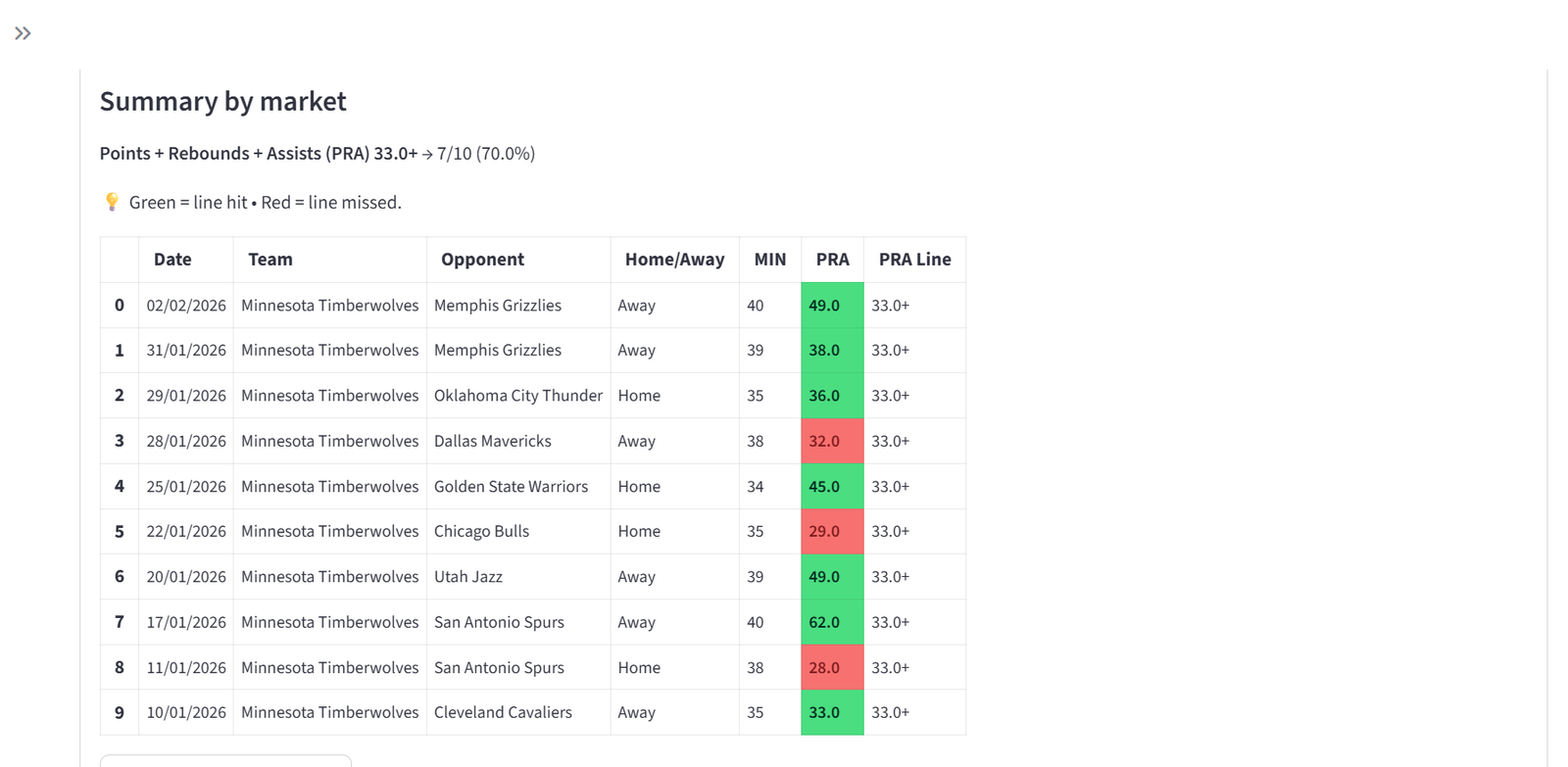
3. Focus on the Last 5–10 Games
Recent performance matters far more than season averages.
Check:
- consistency across recent games
- how often the player comes close to or exceeds the PRA line
- whether production is trending up or down
This gives you a realistic expectation for today’s game.
4. Consider Game Context
Context can make or break a PRA pick.
Important factors:
- expected game competitiveness
- pace of play
- opponent style (fast vs slow)
- blowout risk
Close, fast-paced games favor PRA production.
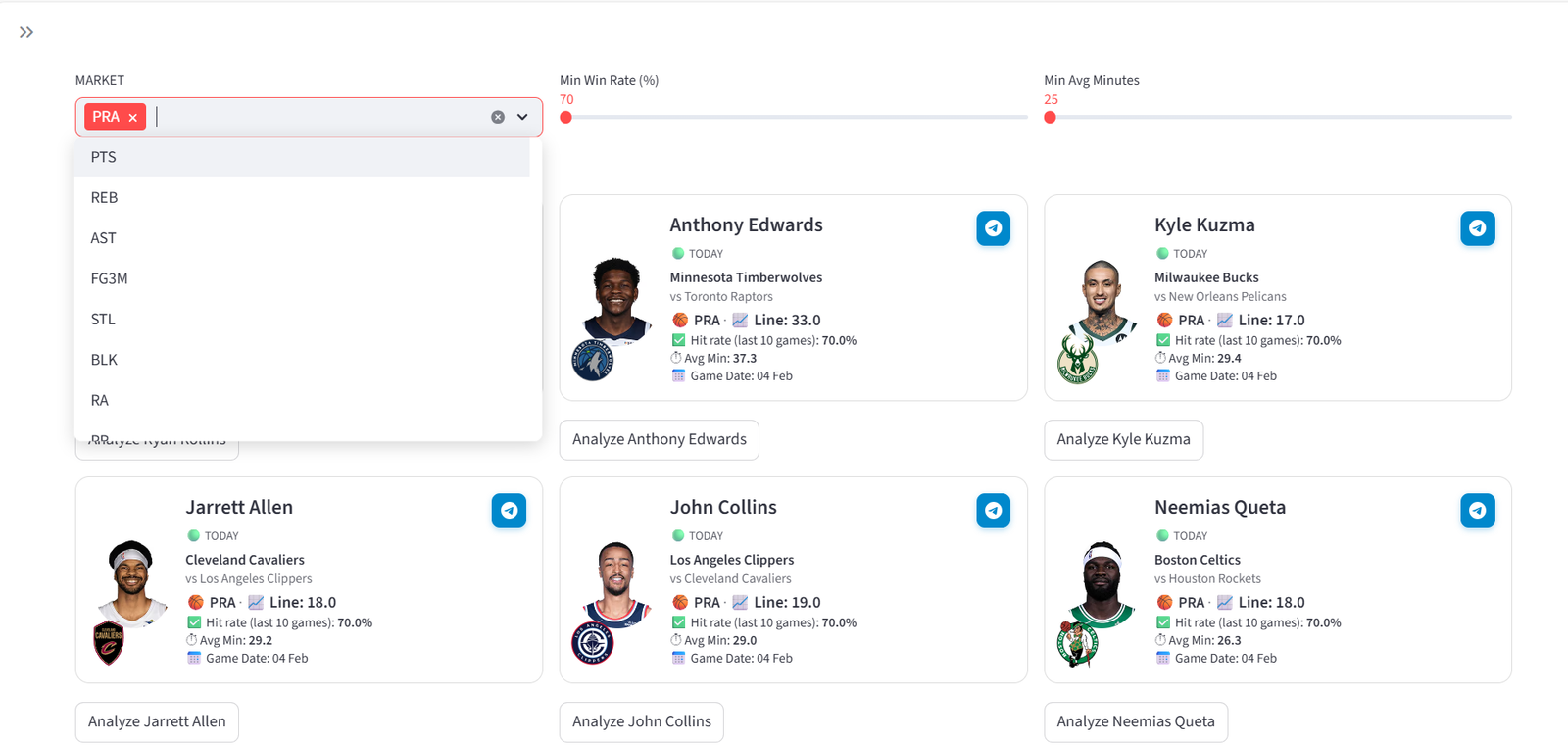
Using Data to Find Better PRA Picks
Manually tracking all these factors takes time.
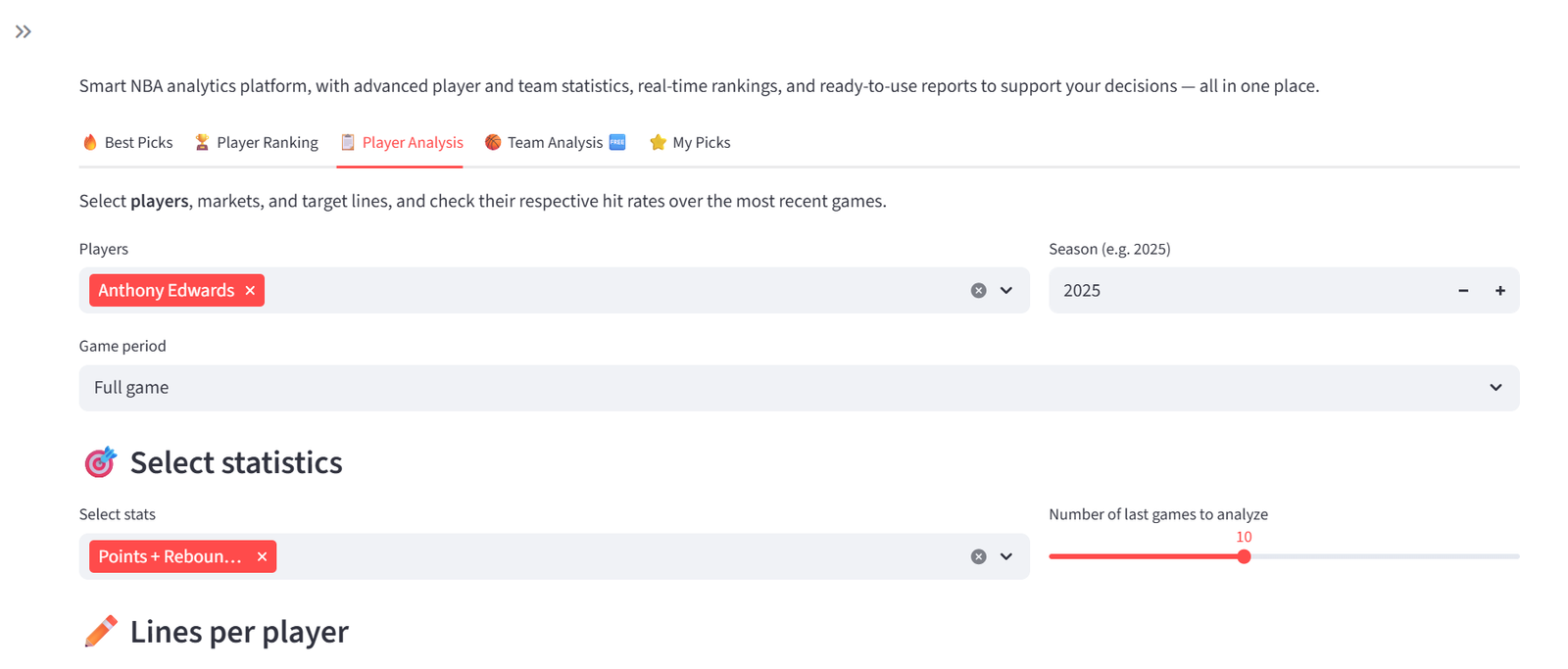
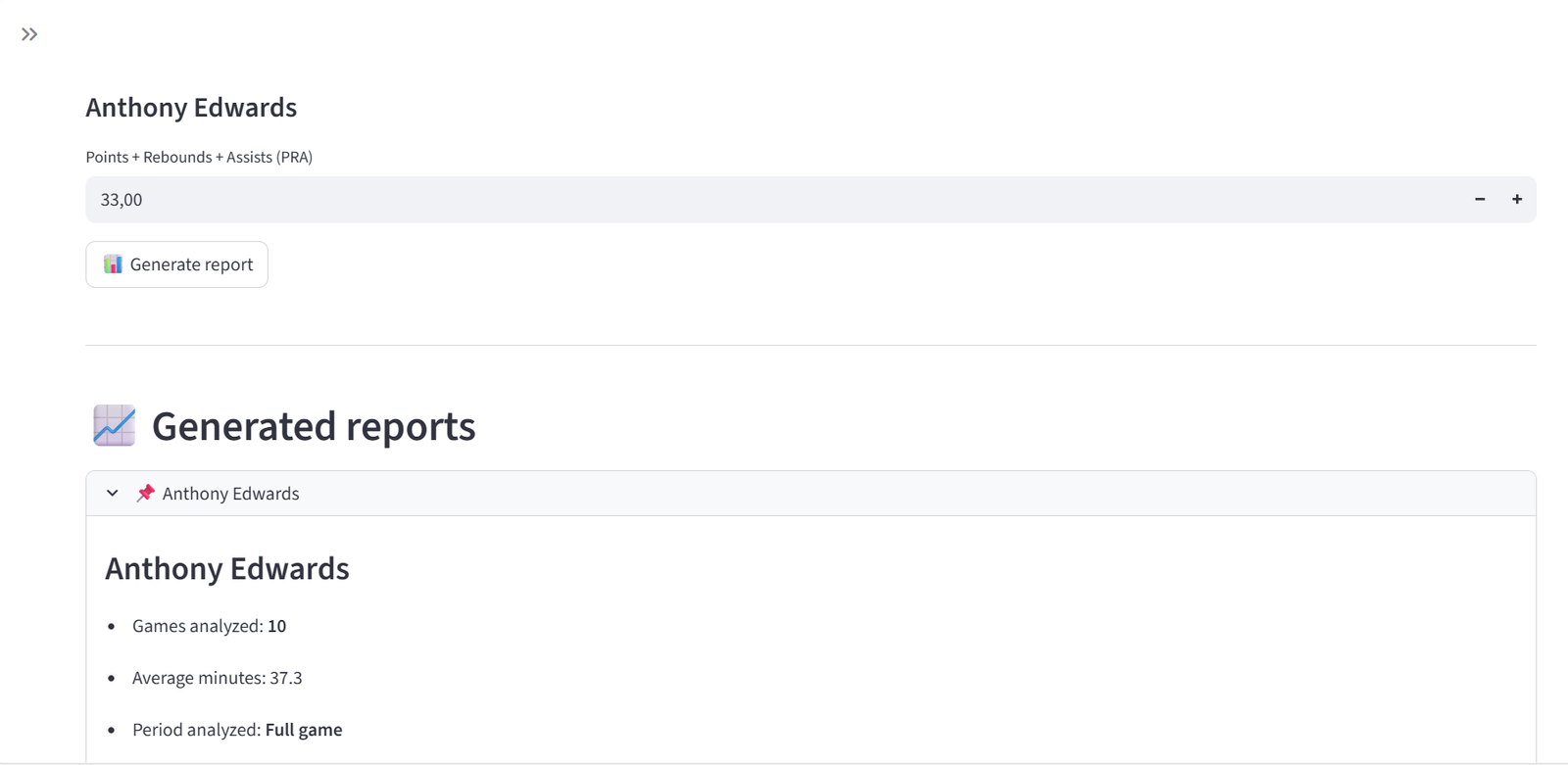
With bballscorer, you can:
- filter players by PRA markets
- see recent combined production instantly
- identify consistency patterns
- compare recent output to current betting lines
Instead of guessing, you rely on structured data to narrow down the best PRA opportunities.
Example: PRA Prop Analysis Explained
Imagine a player with:
- consistent 34–36 minutes
- a stable role as a secondary playmaker
- recent PRA outputs close to or above today’s line
- a matchup in a competitive, high-tempo game
If the betting line is aligned with season averages but lags behind recent reality, the PRA prop may offer value.
This doesn’t guarantee a win — but it represents a high-quality decision, which is exactly what long-term success is built on.
Final Thoughts
PRA props reward bettors who:
- focus on roles, not just stats
- analyze recent data instead of season-long averages
- understand game context and player involvement
When analyzed properly, PRA markets can become one of the most reliable tools in NBA player prop betting.
Analyze NBA PRA Props in the App
Use real data, recent trends and player roles to find stronger PRA picks with confidence.
If you prefer single-stat markets, read our full guide on NBA points props analysis.
Want to apply this logic on a daily basis? Learn how to identify the best NBA scoring player today using real data.